Bulguksa Temple, Gyeongju
385, Bulguk-ro, Gyeongju-si, Gyeongsangbuk-doSite details
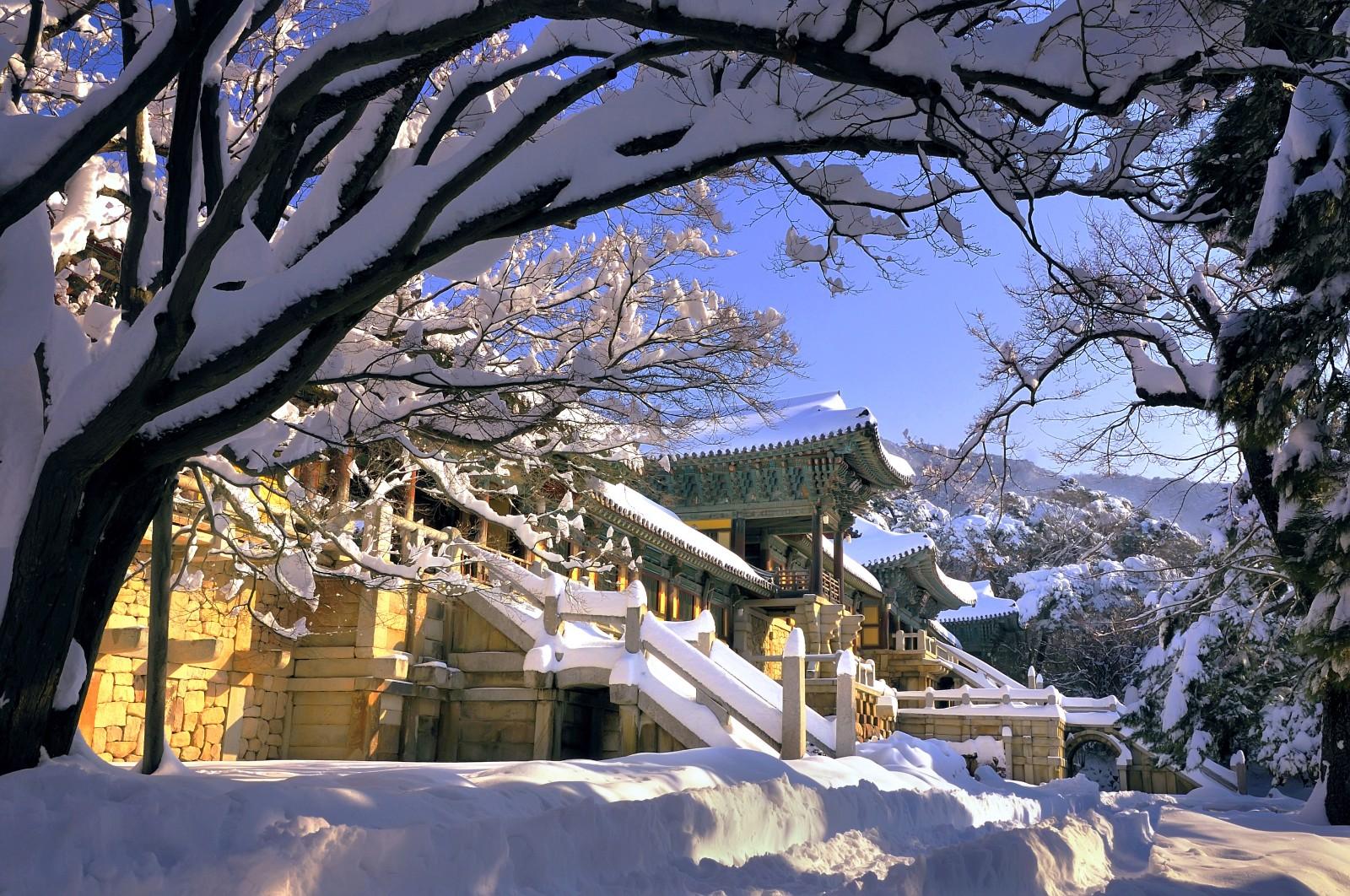
Bulguksa Temple, located on the mid-slope of Tohamsan Mountain, is a pride of Gyeongju and a representative national heritage site of Korea. The name "Bulguk" means "Land of Buddha," and this temple is a place where the Silla people manifested their vision of an ideal world on earth. According to the "Bulguksa Seoseoktap Jungsuhyeongjigi" (Record of the Restoration of Seokgatap at Bulguksa) discovered in the Three-story Stone Pagoda of Bulguksa, the temple was founded in 752. Each structure within the temple, crafted with both skill and sensibility, embodies the Buddhist worldview. The temple grounds are divided by stone terraces, with the lower level representing the human world and the upper level symbolizing the land of Buddha. On this stone terrace are the Cheongungyo and Baegungyo Bridges at Bulguksa Temple in Gyeongju, which lead to the Daeungjeon Hall and are designated as National Treasure No. 23. These bridges, which connect the human world to the land of Buddha, feature arched passages at their base, creating an impression that is both grand and delicate. Next to them are the Yeonhwagyo and Chilbogyo Bridges at Bulguksa Temple in Gyeongju, designated as National Treasure No. 22. These bridges have a unique structure that combines stairs and a bridge. Symbolically representing the Buddhist scripture's depiction of paradise adorned with lotus flowers and seven treasures, these bridges were said to be traversed only by those who had attained enlightenment in the Pure Land. At the center of the temple grounds stands the Daeungjeon Hall of Bulguksa Temple in Gyeongju, designated as Treasure No. 1744. To the east and west of the hall are the Dabotap Pagoda (National Treasure No. 20) and the Three-story Stone Pagoda (National Treasure No. 21), respectively. These two pagodas, considered masterpieces of Buddhist art, represent the teachings of the Lotus Sutra, where Shakyamuni Buddha preaches, and Prabhutaratna Buddha verifies. The Dabotap Pagoda, known for its ornamental beauty, exudes elegant individuality, while the Seokgatap Pagoda, noted for its sense of proportion, radiates a balanced stability. The creative combination of these two pagodas achieves a harmonious unity. Cheongungyo and Baegungyo Bridges at Bulguksa Temple in Gyeongju: These bridges connect Jahamun Gate to the Daeungjeon Hall and symbolically link the ordinary human world below the bridge with the Buddha's world above. Cheongungyo (Bridge of Blue Clouds) is metaphorically associated with a young man in his prime, while Baegungyo (Bridge of White Clouds) is likened to an elderly person with white hair, symbolizing the journey of life. Yeonhwagyo and Chilbogyo Bridges at Bulguksa Temple in Gyeongju: These bridges connect Anyangmun Gate to the Geungnakjeon Hall and are said to have been traversed only by those who had attained enlightenment in the Western Pure Land. Since the temple's founding, many people have crossed these bridges, praying for rebirth in paradise. It is also said that Queen Heongang of Silla, who became a nun, crossed these bridges while praying for the rebirth of the king in the Pure Land. Daeungjeon Hall at Bulguksa Temple in Gyeongju: This important building preserves the original stone structures such as the foundation and stone lanterns from the temple's founding. The current structure was rebuilt in 1765 (the 41st year of King Yeongjo's reign) on the original foundation, making it a significant architectural work that also retains records of the reconstruction and the painting of the decorative patterns (dancheong). Dabotap Pagoda at Bulguksa Temple in Gyeongju: This pagoda is one of Korea's most iconic stone pagodas and exemplifies the pinnacle of 8th-century Unified Silla art. Unfortunately, it was completely dismantled and restored around 1925 during the Japanese occupation, leading to the loss of the relics inside the pagoda, with no records of them remaining. The stone lions that once stood on the stone steps were also looted, leaving only one of the original four lions remaining today. Three-story Stone Pagoda at Bulguksa Temple in Gyeongju: Originally named "Sakyamuni Yeoraesangju Seolbeop Tap," it is also known as Seokgatap. During repairs in 1966, after the pagoda had been damaged by tomb raiders, several relics were discovered inside, including the Mugujeonggwang Daedaranigyeong (National Treasure), the world's oldest known woodblock print.
Official information ↗