Beopjusa Temple, Boeun
405 Beopjusa-ro, Sokrisan-myeon, Boeun-gun, ChungbukSite details
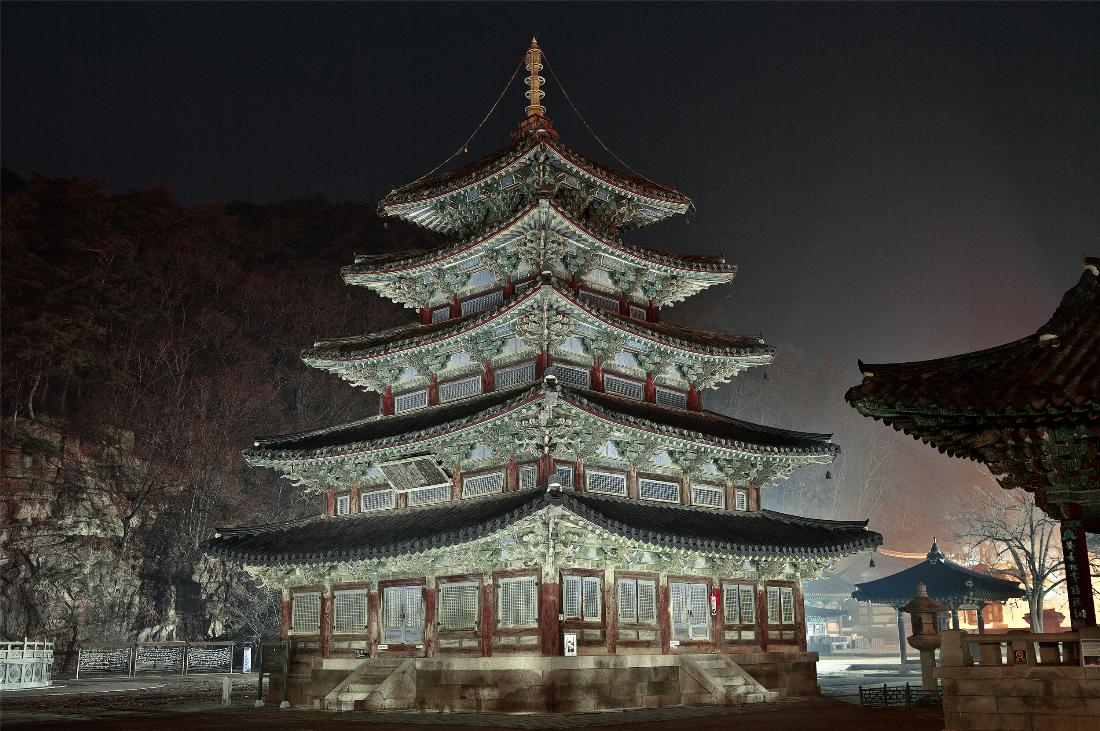
Beopjusa Temple, located in Sokrisan, was founded in 553 AD (14th year of King Jinheung's reign) by the monk Uisin during the Silla Dynasty. As a cradle of Maitreya faith, Beopjusa houses many treasures from the Unified Silla period, including the Boeun Beopjusa Twin Lion Stone Lantern, the stone pond Boeun Beopjusa Seoknyeonji, and the Boeun Beopjusa Palsangjeon, the only remaining five-story wooden pagoda in Korea. Notably, the Daeungbojeon Hall of Boeun Beopjusa is considered one of the three great Buddhist halls, along with the Muryangsujeon Hall of Buseoksa Temple and the Gakhwangjeon Hall of Hwaeomsa Temple in Gurye. Boeun Beopjusa Twin Lion Stone Lantern Located between the Daeungjeon Hall and Palsangjeon Hall of Beopjusa Temple, this stone lantern is the oldest stone sculpture featuring lions. Instead of the typical octagonal pillars from the Unified Silla period, this unique lantern is supported by two carved lions. It is considered one of the representative works of Unified Silla stone lanterns, along with the Sacheonwang Stone Lantern of Beopjusa Temple. Boeun Beopjusa Seoknyeonji This small stone pond, said to have floated lotus flowers, symbolizes the Pure Land in Buddhism. Various lotus-inspired designs can be seen throughout the temple. The columns on the upper rail of the entrance resemble those of the stone railing pillars of the Dabotap Pagoda in Bulguksa Temple, preserving an ancient aesthetic. Boeun Beopjusa Palsangjeon The only remaining five-story wooden pagoda in Korea, the current structure was rebuilt after the Japanese invasions of Korea and renovated in 1968. It is named Palsangjeon after the Palsangdo (paintings depicting the eight scenes from the life of Buddha) that adorn its walls.
Official information ↗