Yeongju Sosu Seowon
2740 Sobaek-ro, Sunheung-myeon, Yeongju-si, GyeongbukSite details
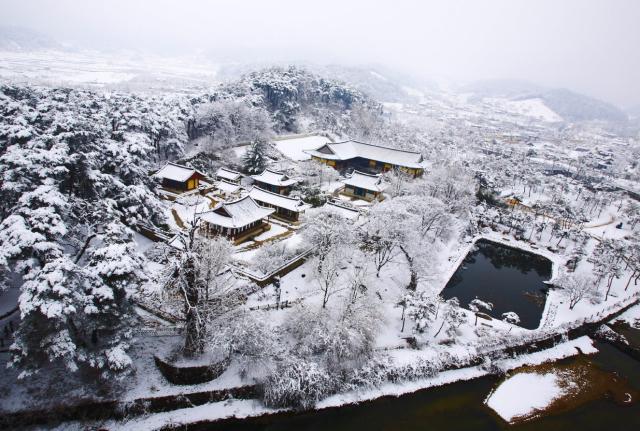
Sosu Seowon is the first Seowon in Korea and the first to receive a royal charter, making it a private educational institution. Ju Se-bung, who was appointed as the magistrate of Punggi, built a shrine honoring An Hyang, who first introduced Neo-Confucianism to Korea. In the 38th year of King Jungjong (1543), Ju Se-bung established Baekundong Seowon to educate Confucian students, and it was later renamed Sosu Seowon after receiving a royal charter. Notable buildings include the Ganghakdang, where academic lectures were held, and Munseonggongmyo, a shrine within the Seowon grounds. The Sosu Museum houses a portrait of An Hyang, and the Yeongju Suksu Temple site’s Dangganjiju remains as a relic from when there was a temple before the Seowon was built. The Ganghakdang was a place where one of the two main functions of a Seowon, academic discussion, was carried out. It was built by stacking high platforms of long stone slabs, upon which trimmed natural stones were placed as the foundation stones. Inside the Ganghakdang, on the northern side of the main hall, there is a plaque with the inscription "Sosu Seowon (紹修書院)" written by King Myeongjong himself. Munseonggongmyo, a shrine within Sosu Seowon, serves as the memorial shrine and is dedicated to the mid-Goryeo scholar Hoiheon An Hyang. Memorial rites are held every March and September on the initial day of Jeong (丁). The ritual procedures and records of the memorial ceremonies written by Ju Se-bung are preserved. An Hyang passed the state examination in 1260 (1st year of King Wonjong) and held various official positions. He introduced Zhu Xi's philosophy to Korea through multiple visits to the Yuan Dynasty, making him Korea’s first Zhu Xi scholar.
Official information ↗