Columnar Joint Along Jungmun and Daepo Coasts, Jeju
36-24, Ieodo-ro, Seogwipo-si, Jeju-doSite details
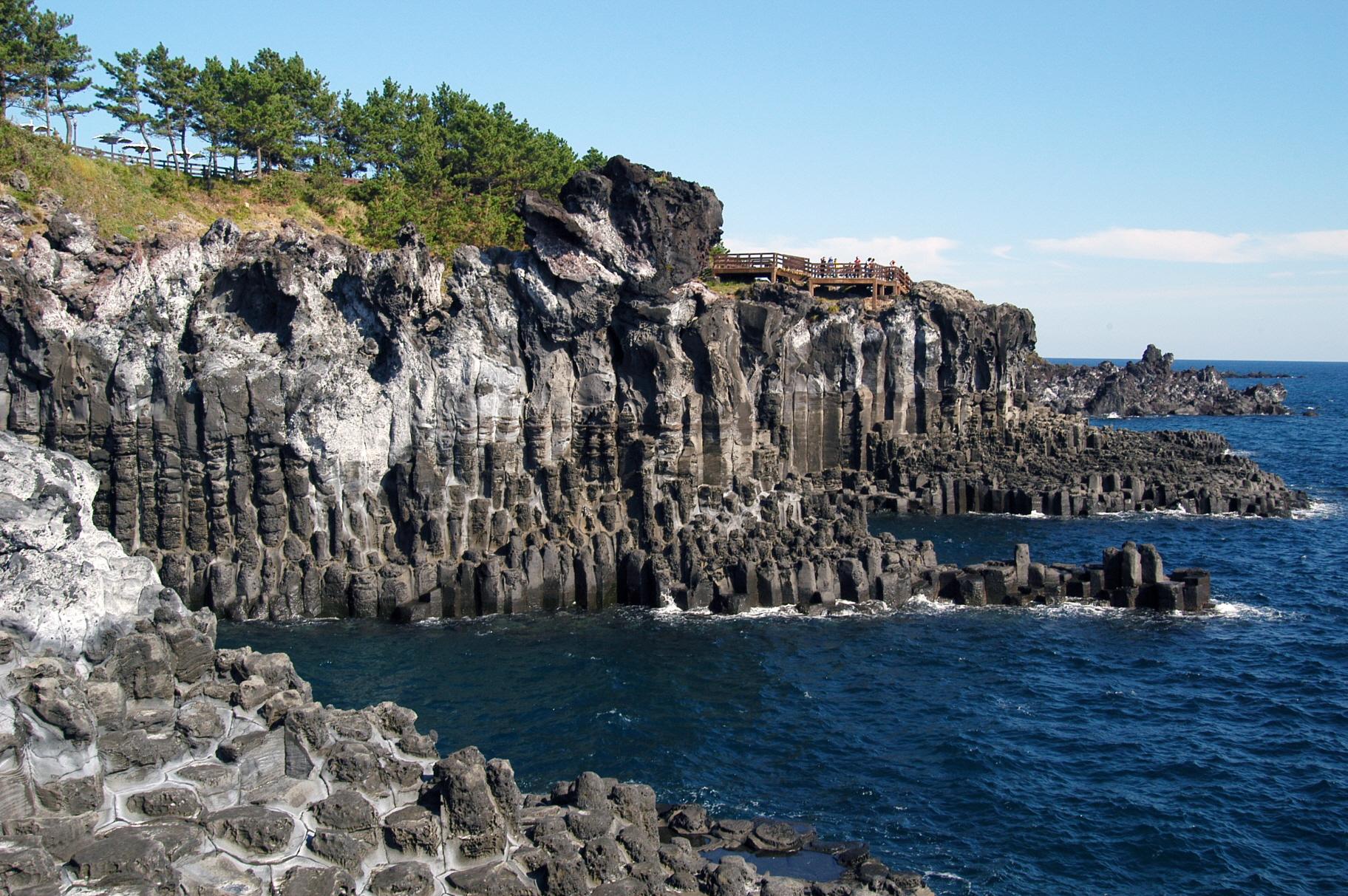
The Jusangjeolli Cliff at Jungmun Daepo Coast is made of basalt columns that are believed to have formed about 250,000 years ago during the fourth period of the Cenozoic era when lava from the volcanic crater at Nokhajiak (a small parasitic cone north of Jungmun Coast) cooled and contracted. As the lava flowed out of the volcano and cooled, it contracted, forming cracks known as "joints. " Vertical columnar joints, which have cross-sections shaped like four to six-sided polygons, are known as "Jusangjeolli. " The shape and size of the Jusangjeolli columns depend on the cooling rate and direction of the lava, with the columns closer to the sea being more distinct than those on land. The Jusangjeolli Cliff at Jungmun Daepo Coast is the largest in Korea, with polygonal black stone pillars lined up like a folding screen along the coast. The 30- to 40-meter-high columns stretch for about 1 km, creating a breathtaking and dizzying landscape. The waves crashing against these majestic stone pillars are also a spectacular sight, with the blue waves crashing in a turbulent spray of white foam, showcasing the sheer beauty of nature.
Official information ↗