Gwanghallu Pavilion, Namwon
1447 Yocheon-ro, Namwon-si, Jeollabuk-doSite details
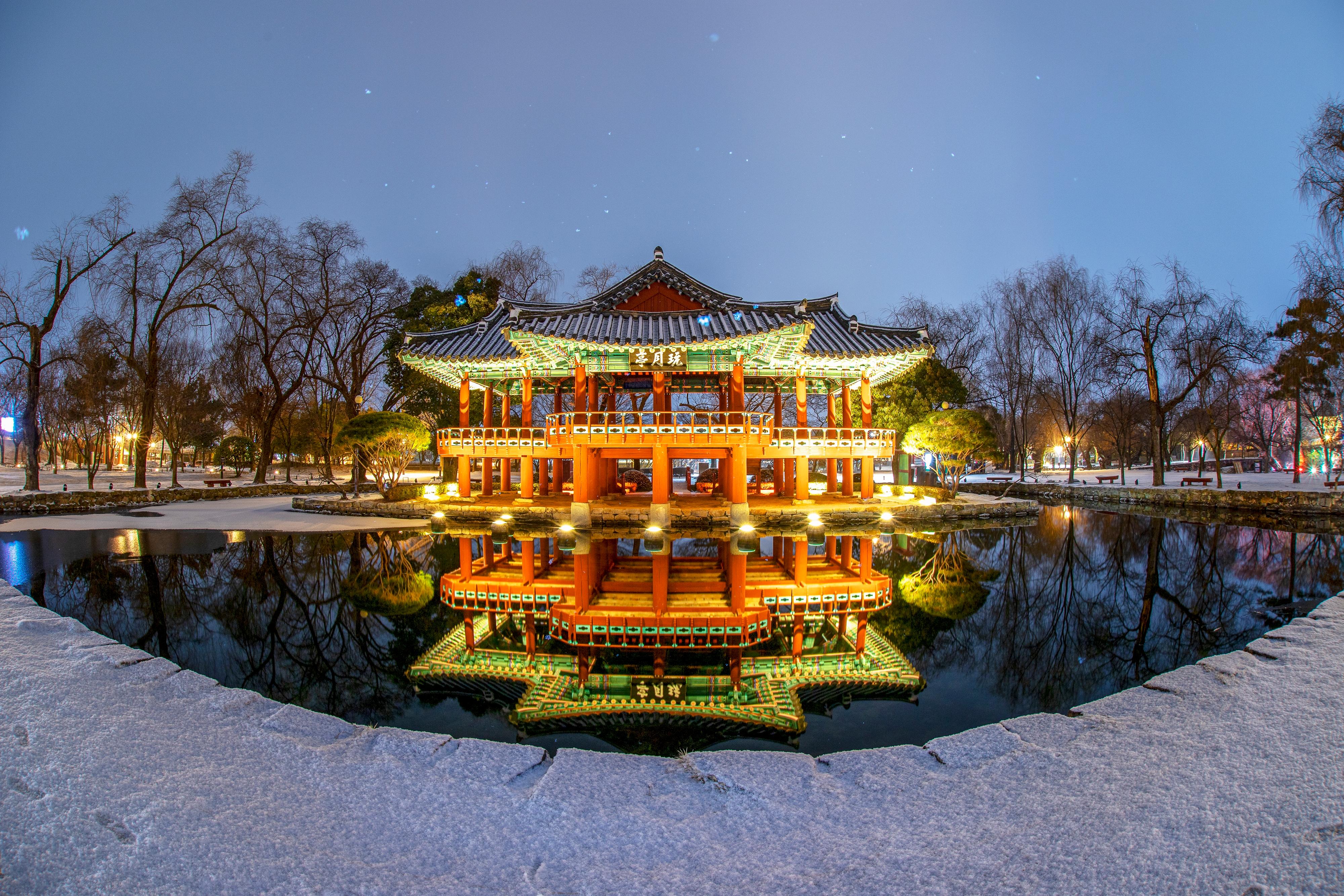
Gwanghallu Pavilion is one of Korea’s most beautiful pavilions, often compared to Gyeonghoeru in Seoul, Bupyeongnu in Pyongyang, and Chokseongnu in Jinju. Built by Hwang Hui, a renowned prime minister of the Joseon Dynasty, in 1419, the pavilion was rebuilt in 1638 (the 16th year of King Injo's reign) after being burned down during the Japanese Invasion of Korea in 1597 (Jeongyujaeran). The surrounding garden, known as Gwanghallu Garden, is a significant example of traditional Korean landscape architecture, embodying the principles of geomancy, yin-yang, and the five elements. Gwanghallu symbolizes the Moon Palace, and the pond in the garden represents the Milky Way. The bridge installed over the pond is the Ojakgyo Bridge, where the Cowherd and the Weaver Girl (Gyeonu and Jiknyeo) meet on the seventh day of the seventh lunar month. The three islands created in the pond symbolize Bongraesan, Bangjangsan, and Yeongjusan, which are mountains where Taoist immortals are believed to reside. Gwanghallu Garden, which expresses an ideal world where these immortals live, is also the place where Seong Chunhyang and Yi Mongryong, the main characters of the novel "The Tale of Chunhyang," formed their bond. The site includes Chunhyang Shrine, which houses a portrait of Chunhyang painted by artist Kim Eun-ho, the Chunhyang Hall with various information related to Chunhyang, and a thatched house that recreates Chunhyang's home.
Official information ↗