Jongmyo Shrine
157 Jongno, Jongno-gu, SeoulSite details
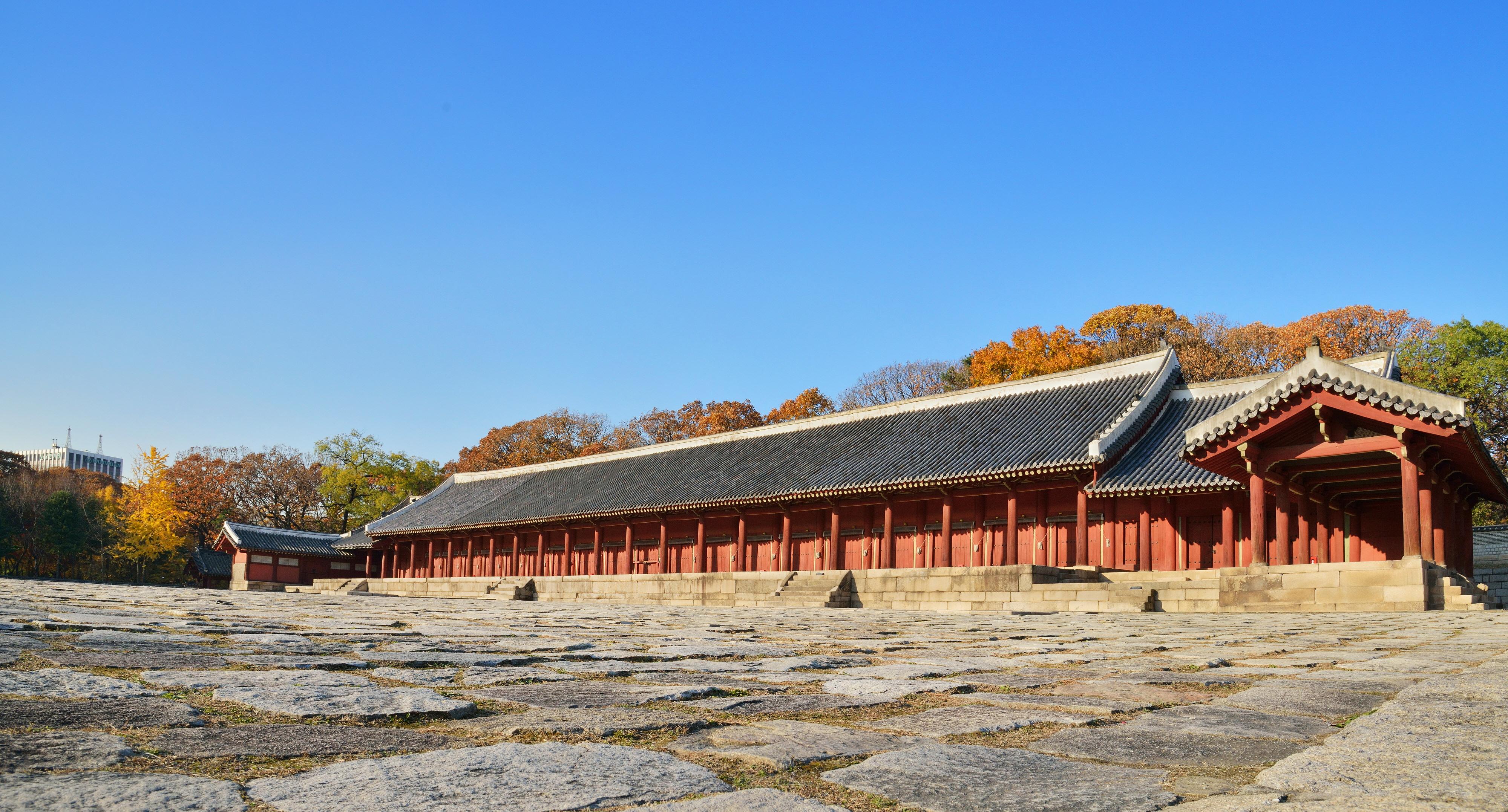
The Jongmyo Shrine is a temple where the ancestral tablets of the kings and queens of the Joseon Dynasty, as well as those posthumously honored as kings and queens, are enshrined. Construction began in 1394 (the 3rd year of King Taejo's reign) and was completed the following year. Rooted in Confucianism, the Joseon Dynasty placed great importance on ancestral rites. Adhering faithfully to Confucian rituals was directly tied to the authority of the royal family, which is why King Taejo, Yi Seong-gye, prioritized the construction of Jongmyo Shrine. This signifies that Jongmyo was not only a national symbol but also a sacred place that demonstrated the legitimacy of the royal family. The main hall of Jongmyo, known as Jeongjeon, is the central space for the ancestral rites and houses the ancestral tablets of successive kings. It is the longest single wooden structure in Korea. While it was not initially large, the hall was gradually extended sideways as more space was needed over time, leading to its current form. Another shrine, Yeongnyeongjeon, serves as a separate sanctuary that enshrines the ancestral tablets of King Taejo's four preceding generations and the kings and queens not housed in Jeongjeon. The simple and unadorned structure of Yeongnyeongjeon, preserved in its original form, exudes a restrained beauty. The ritual ceremonies conducted at Jongmyo are known as Jongmyo Jerye, designated as a National Intangible Cultural Heritage and recognized by UNESCO as an Intangible Cultural Heritage of Humanity. Also referred to as "Daeje" (Grand Rite), Jongmyo Jerye is solemnly performed following strict Confucian procedures. The music played during these rituals is called Jongmyo Jeryeak, which is also recognized as a National Intangible Cultural Heritage and a UNESCO Intangible Cultural Heritage of Humanity. This music, which combines instrumental performance, singing, and dance, holds unique value as it is a fully preserved form of royal ritual music. It is also significant for showcasing the distinct cultural characteristics of Korea. Jongmyo Jeongjeon: Initially, during the early Joseon Dynasty, the ancestral tablets of King Taejo Yi Seong-gye's four preceding generations were enshrined here. However, it later became the place where the ancestral tablets of the reigning king's four generations (great-great-grandfather, great-grandfather, grandfather, and father) as well as those of other meritorious kings and queens of Joseon were enshrined and venerated. Jongmyo, along with Sajikdan, the altar for the deities of land and grain, was regarded as one of the most important ceremonial spaces in the state. Jongmyo Yeongnyeongjeon: As part of Jongmyo, Yeongnyeongjeon is located to the northwest of the main hall, Jeongjeon. It serves as the sanctuary where the ancestral tablets of King Taejo's four preceding generations and the tablets of kings and queens who could no longer be enshrined in Jeongjeon are relocated and enshrined. Jongmyo Jerye: This refers to the ancestral rites conducted at Jongmyo, also known as "Daeje" (Grand Rite). Jongmyo Jerye is divided into regular rites (Jeongsije) and special rites (Imsije). The regular rites were held in the first month of each of the four seasons—January, April, July, and October. Special rites were conducted when significant events, either good or bad, occurred in the country. However, since the liberation of Korea, Jongmyo Jerye has been held only once a year, on the first Sunday of May. Jongmyo Jeryeak: This refers to the music performed during the Jongmyo ancestral rites, incorporating dance, singing, and instrumental music. It is also known as "Jongmyoak. " Originally created in 1447 (the 29th year of King Sejong's reign) for use in royal court ceremonies, Jongmyo Jeryeak was later adapted in 1464 (the 10th year of King Sejo's reign) to suit the needs of ancestral rites and has been preserved in this form to the present day.
Official information ↗