Namhansanseong Fortress
San 23, Sanseong-ri, Namhansanseong-myeon, Gwangju-si, Gyeonggi-doSite details
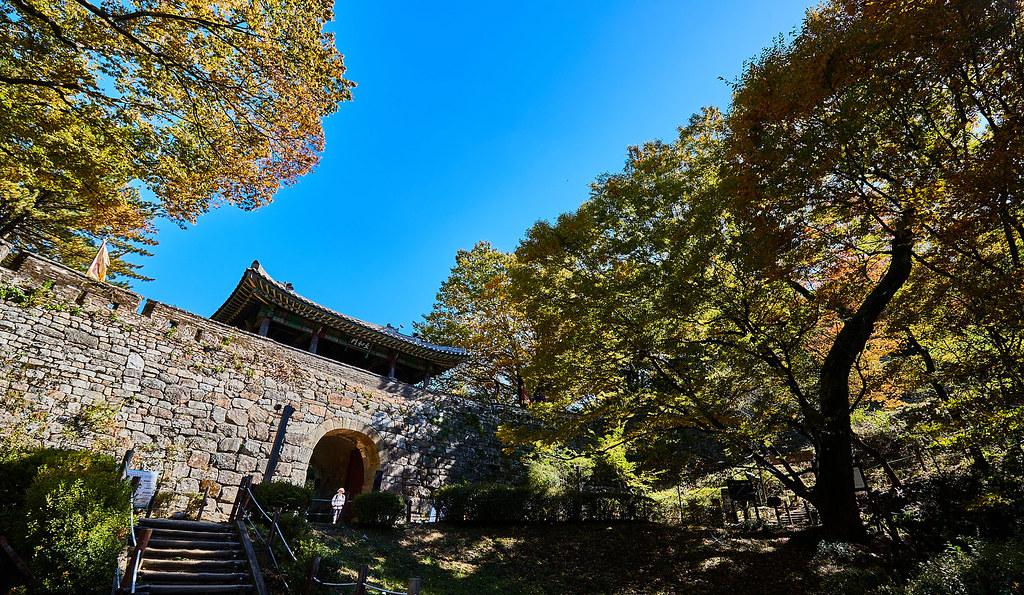
Along with the Han River, Namhansanseong Fortress had been a crucial stronghold in determining the hegemony of the Three Kingdoms. After Baekje established its capital at Wiryeseong in Hanam, Baekje people considered Namhansanseong a sacred site and a spiritual mountain. The reason why Sungryeoljeon, a shrine dedicated to Onjo the Great, the founder of Baekje, is located within Namhansanseong is not unrelated to this. During the Joseon Dynasty, Namhansanseong played a significant role as a defensive stronghold. In 1636 (the 14th year of King Injo's reign), King Injo took refuge in Namhansanseong during the "Byongjahoran" war. The Qing army, which had rapidly advanced to Hanyang, crossed the Han River and surrounded Namhansanseong. At that time, the food stored within the fortress was not enough for even two months. Isolated and helpless, Joseon had no choice but to surrender after Ganghwado was also captured. King Injo, who walked out of Namhansanseong himself, surrendered to the Qing army at Samjeondo, where they were stationed, and signed a humiliating agreement. Qing Taizong forced the construction of a stele to commemorate his achievements, which is the Seoul Samjeondo Stele located in Jamsil-dong, Songpa-gu. Although a history of defeat remains, Namhansanseong itself is a natural fortress that has never been conquered. This fortress, which protected Hanyang along with Bukhansanseong, was rebuilt in 1624 (the 2nd year of King Injo's reign) by utilizing the old site of Jujangseong, which was built in 673 (the 13th year of King Munmu of Silla's reign). It underwent several reconstructions, and exchanges between Korea, China, and Japan, as well as the introduction of Western weapons, had a significant impact on the construction of Namhansanseong. Built precisely utilizing the rugged mountainous terrain, the fortress once had many buildings, but currently, only the east, west, and south gate towers, defensive facilities, military training facilities, and government offices remain. A notable building is the Namhansanseong Royal Palace historical site. This place, which houses not only administrative facilities but also the spirit tablets of Jongmyo and Sajik, demonstrates that Namhansanseong could serve as a temporary capital in times of crisis.
Official information ↗